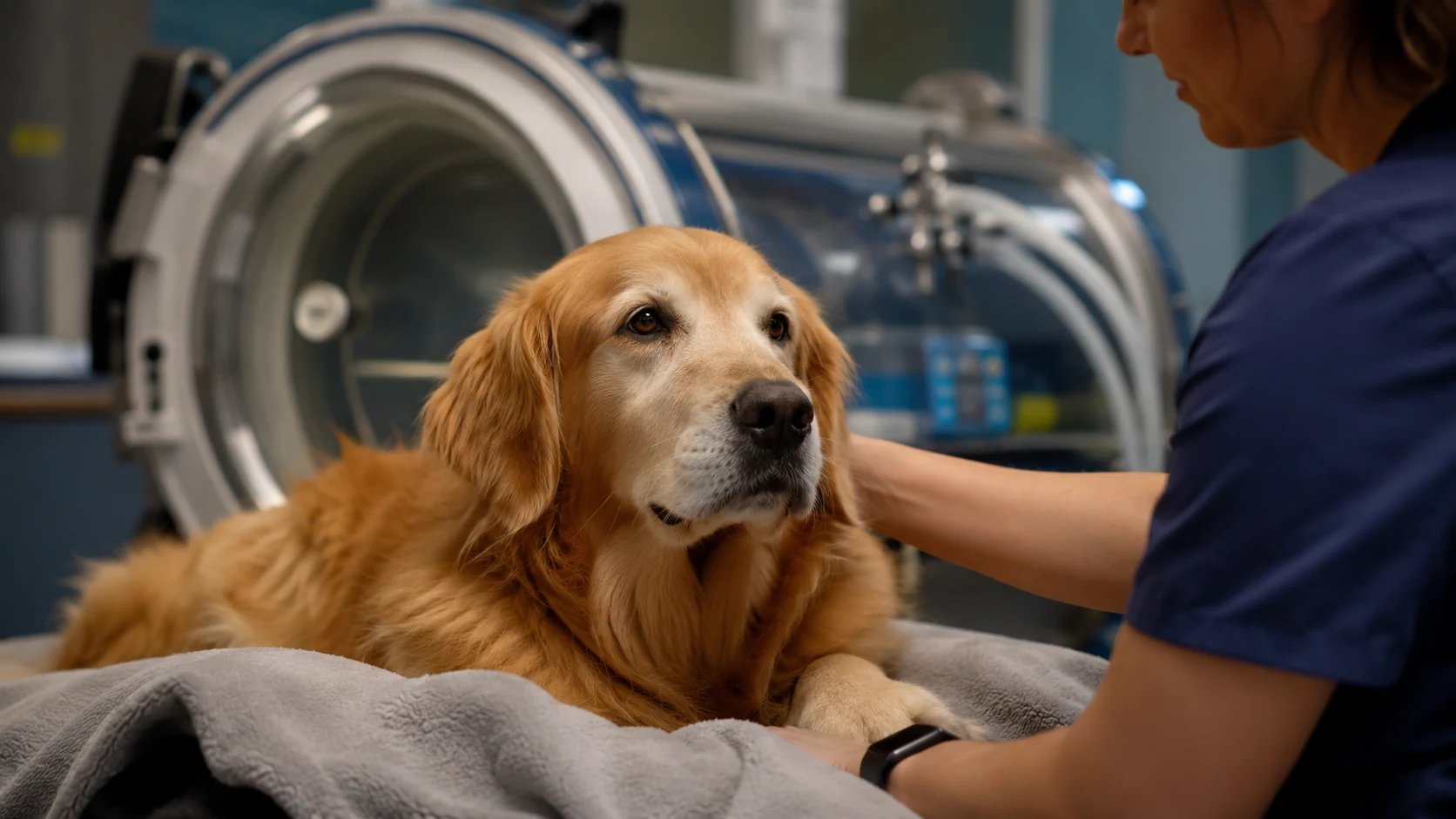
Hyperbaric oxygen therapy provides the body with extra support when healing begins to slow. A vet clinic in Williamsburg, VA, may use this treatment as part of a wider care plan. Added oxygen helps create better conditions for damaged tissue to recover.
Coastal Animal Referral Emergency (CARE) looks at each pet's needs before recommending this type of care. Our team may pair the therapy with surgery, medicine, wound care, or close monitoring. Every case depends on the pet's injury, illness, and stage of recovery.
Different health problems can respond to oxygen support in different ways.
Here are the ways hyperbaric oxygen therapy may help dogs and cats heal.
Key Takeaways
- Extra oxygen can reach injured tissue when normal blood flow falls short.
- Hyperbaric therapy may support healing after wounds, surgery, infection, or trauma.
- The treatment works best as part of a larger care plan, not as a stand-alone fix.
Oxygen Reaches Past Swollen Tissue
Thick swelling can press on small blood vessels around an injury. Hyperbaric oxygen therapy increases the amount of oxygen carried in the bloodstream by increasing the pressure. More oxygen can then move into areas where normal blood flow has slowed.
Injured cells need steady oxygen while they repair damaged tissue. Added support may help those cells keep working as swelling eases and circulation improves. This treatment provides the body with better healing conditions, while other veterinary care targets the main problem.
Injured Cells Get More Energy
Healing takes more work than damaged cells can handle on their own. Pressurized oxygen helps give those cells the strength needed to keep the repair process moving.
Helping Cells Clear Damaged Material
Injured tissue leaves behind waste that can slow recovery. Cells need enough energy to break down and remove this damaged material. Better cleanup creates a healthier space for new tissue to form.
Strengthening the Fight Against Germs
White blood cells use oxygen while attacking harmful bacteria. Low oxygen can weaken this natural defense inside a wound. Extra support may help the body control infection while medicine treats the cause.
Supporting New Blood Vessel Growth
Some damaged areas need new blood vessels before steady healing can return. Higher oxygen levels can help signal the body to build these tiny pathways. Fresh circulation later brings nutrients and support deeper into the recovering tissue.
Swelling Drops Without Cutting Off Oxygen
Fluid buildup can crowd nerves, muscles, and healing areas after injury or surgery. Inside the chamber, blood vessels narrow while the blood still carries a large amount of oxygen. Oxygen keeps reaching nearby cells as pressure begins to ease.
Brain and spinal tissues have little room for swelling. Careful oxygen support may help tissue keep healing while the body moves extra fluid away. Families may find this option at a vet clinic in Williamsburg, VA, as one part of a full treatment plan.
White Blood Cells Fight Harder
Deep wounds often have too little oxygen. Hyperbaric oxygen therapy raises oxygen levels around damaged tissue under pressure. This added supply may help white blood cells kill certain bacteria where blood flow is weak.
Antibiotics still target the infection while wound care clears away damaged tissue. Veterinary teams use oxygen therapy as supplemental support rather than a stand-alone cure. Together, these treatments give the body a stronger chance to control germs and repair the wound.
Why Do Some Wounds Stop Healing?
A wound may stall when dead tissue, germs, or weak blood flow keeps oxygen away. Fresh skin has a hard time growing when swelling and damage block the repair process. Hyperbaric oxygen therapy may improve the area while medicine, cleaning, and bandage care continue.
Coastal Animal Referral Emergency (CARE) studies the whole wound before adding this treatment. Care may include removing damaged tissue, fighting infection, and tracking changes over time. This full plan gives a stubborn wound added support without treating oxygen therapy as the only answer.
Tissue Near the Injury Gets Protected
Trouble can spread beyond the part of an injury you can see. Nearby tissue may look healthy while low blood flow quietly puts its cells at risk. Pressurized oxygen may help this weak outer area stay alive while the main treatment takes effect.
Here is how added oxygen may protect tissue around the wound:
- Limiting the Damage Zone: At-risk cells need oxygen before their condition becomes too severe. Better oxygen delivery may keep the injured area from growing larger.
- Protecting Tiny Blood Vessels: Swelling and trauma can harm the small vessels that feed nearby tissue. Oxygen support may help these delicate pathways survive until blood flow becomes steadier.
- Easing Stress After Blood Flow Returns: Restored circulation can cause a strong reaction inside injured tissue. Hyperbaric treatment may calm parts of this response and reduce added cell damage.
- Preserving Tissue for Recovery: Saving weak tissue around the main wound gives the body more healthy material to repair. It may also give the veterinary team a stronger base for wound care or surgery.
Early oxygen support may help protect the fragile tissue standing between recovery and lasting damage.
Antibiotics Gain More Support
Stubborn infections often hide in areas where blood moves slowly. Poor circulation makes it harder for medicine to reach deep tissue and fight germs. Hyperbaric treatment brings more oxygen into these weak spots, so certain antibiotics have better conditions to work.
Some infections also need wound cleaning, surgery, or other medical care. Treatment at a vet clinic in Williamsburg, VA, may combine these steps based on the pet's condition. This team approach helps medicine and the body's defenses work together to attack the problem.
Give Healing Support at Our Vet Clinic in Williamsburg, VA
Hyperbaric oxygen therapy gives damaged tissue added support when healing needs a boost. Coastal Animal Referral Emergency (CARE) can build this treatment into a broader care plan based on your pet's condition. The right mix of oxygen therapy, medicine, and monitoring can help recovery move in a better direction.